
Mindfulness for Anxiety and Trauma - More About Somatic Therapy in Chapel Hill, NC
If you’ve been searching for somatic therapy in Chapel Hill NC, anxiety therapy near Chapel Hill, or trauma therapy in Durham or Raleigh, you’re not alone. Many people are looking for approaches that go beyond traditional talk therapy—something that actually helps them feel calmer, more grounded, and more in control.
Mindfulness and somatic therapy are two of the most effective, research-backed approaches for treating anxiety, PTSD, and chronic stress.
Why Mindfulness Works for Anxiety and Trauma
Mindfulness practices—like breathwork, grounding, and body awareness—have been shown to reduce symptoms of anxiety disorders, trauma, and burnout. Research in neuroscience shows mindfulness can:
Lower activity in the brain’s fear center (amygdala)
Improve emotional regulation and resilience
Reduce rumination, panic, and intrusive thoughts
Increase a felt sense of safety in the body
For many people in Chapel Hill, Durham, and Raleigh, anxiety and trauma don’t just show up as thoughts—they live in the body. That’s why somatic therapy in North Carolina is becoming such a sought-after approach.
Why Talk Therapy Isn’t Always Enough
If you’ve tried therapy before and still feel stuck, it doesn’t mean therapy “didn’t work”—it may just mean you need a different approach. Trauma is stored in the nervous system, not just the mind. Trying to think your way out of anxiety can only go so far.
That’s where body-based therapy in Chapel Hill can make a real difference.
How Somatic Therapy Helps You Heal
Somatic therapy for anxiety and trauma brings mindfulness into the body in a structured, trauma-informed way. Instead of only talking about your experiences, you learn to track and shift what’s happening internally.
In somatic therapy sessions in Chapel Hill, NC, you’ll:
Learn grounding techniques for anxiety that help in real time
Build awareness of body sensations, breath, and nervous system cues
Gently release stored stress and trauma responses
Develop tools for nervous system regulation and emotional balance
This approach helps you move out of survival states (fight, flight, freeze) and into a more regulated, connected way of being.
A More Effective Path to Anxiety & Trauma Treatment in Chapel Hill
Combining mindfulness-based therapy with somatic therapy in Chapel Hill and Durham can lead to deeper, longer-lasting change—especially if you’ve felt stuck in traditional therapy.
Whether you’re navigating high-functioning anxiety, trauma recovery, or feeling disconnected from yourself, somatic therapy offers a way to not just understand your patterns—but actually shift them.
If you’re looking for somatic therapy in Chapel Hill NC, trauma therapy near Durham, or anxiety therapy in Raleigh, this approach offers a powerful alternative—one that helps you not just think differently, but feel different.
What is Brainspotting?
Brainspotting is a Powerful Approach for Trauma, Anxiety, and Feeling Stuck
If you’ve ever felt like you understand your struggles logically—but still feel stuck emotionally—you’re not alone. Many people come to therapy with insight, yet find that certain patterns, reactions, or beliefs just won’t shift. This is where Brainspotting can offer something different.
What is Brainspotting?
Brainspotting is a brain-body based therapy that helps access, process, and release unresolved trauma and emotional pain. It is based on the idea that “where you look affects how you feel.” By identifying specific eye positions—called “brainspots”—we can connect to areas in the brain where experiences and emotions are stored.
Unlike traditional talk therapy, Brainspotting works with the deeper, subcortical parts of the brain—the areas responsible for survival responses, emotional memory, and trauma. This allows for healing that goes beyond words.
How Does It Work?
During a Brainspotting session, your therapist helps you notice where you feel activation in your body and guides you in finding a corresponding eye position. As you focus on that spot, your brain begins to process and release what has been held there—often without needing to fully verbalize the experience.
The process is gentle, focused, and led by your nervous system. You remain in control the entire time, and sessions move at a pace that feels safe and manageable.
What Can Brainspotting Help With?
Brainspotting can be effective for a wide range of concerns, including:
Trauma and PTSD
Anxiety and chronic stress
Performance blocks
Attachment wounds
Negative self-beliefs
Feeling “stuck” despite insight
Physical pain/discomfort
Many clients report feeling a sense of relief, increased clarity, and greater emotional regulation after sessions.
Why It Feels Different
One of the most powerful aspects of Brainspotting is that it doesn’t require you to “figure it all out” or explain everything. You don’t even have to access or talk about specific memories or experiences. Brainspotting honors the body’s innate ability to heal when given the right conditions. For people who feel overwhelmed by talking about their experiences—or who have tried other therapies without the results they hoped for—this can be especially meaningful.
Is Brainspotting Right for You?
If you’ve been feeling stuck, overwhelmed, or disconnected from yourself, Brainspotting may offer a new path forward. It can be used on its own or integrated with other approaches.
Healing doesn’t always happen through insight alone. Sometimes, it happens by allowing the brain and body to process what’s been held beneath the surface.
If you’re curious about Brainspotting or want to explore whether it’s a good fit for you, reaching out to a trained therapist is a great first step. Book a time to talk to one of our trained providers!
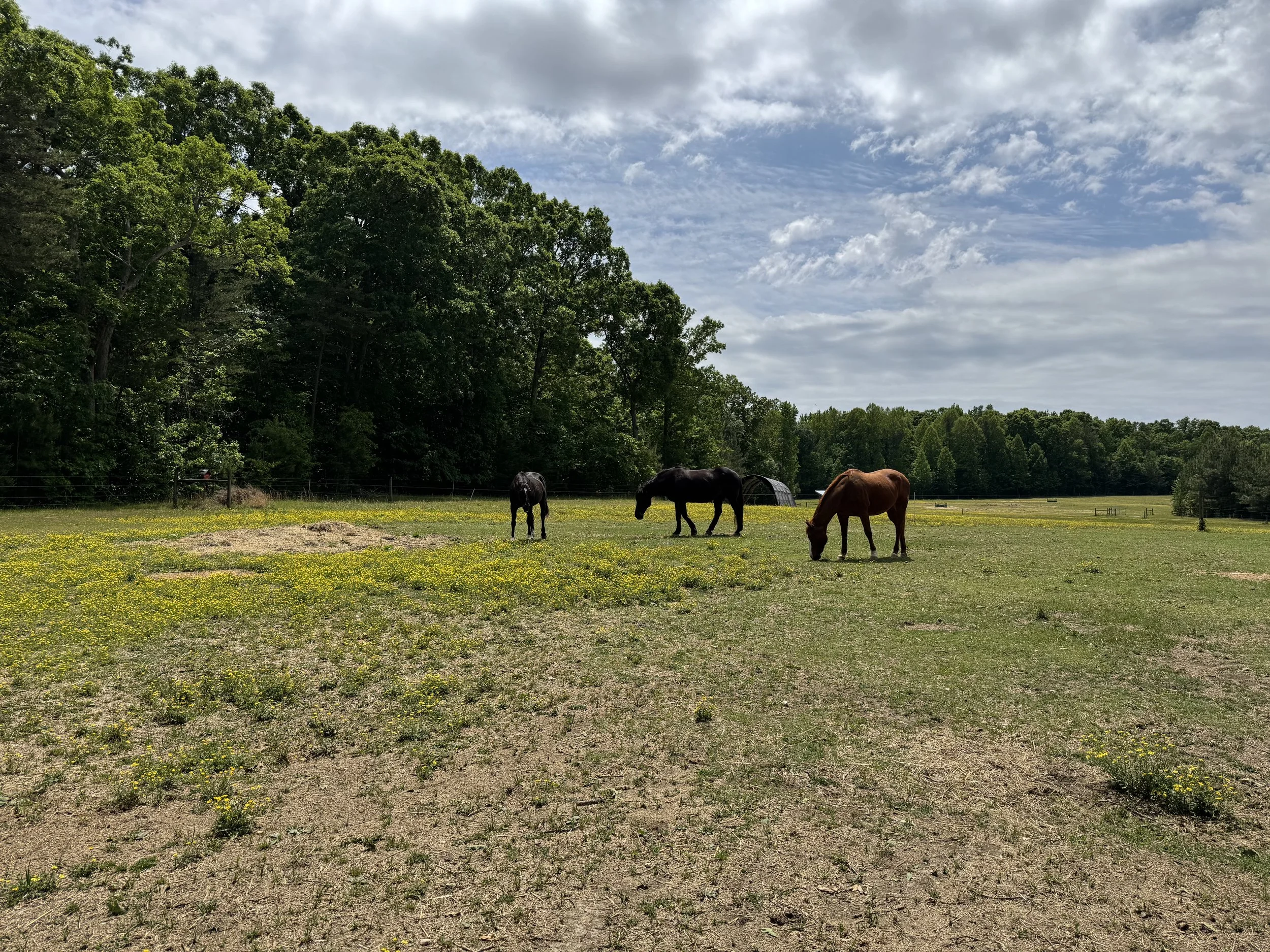
What should I expect during my first equine-assisted psychotherapy session?
Your first Equine-assisted psychotherapy (EAP) session will be about experience and observation - doing and being rather than thinking. There will be less talking than you would experience in traditional therapy. It’s often surprisingly gentle, non-performative, and grounded.
Here’s what you can expect:
1. Orientation & Safety
You’ll start by meeting the therapist (and sometimes an Equine Specialist) and going over:
Informed consent: how we work, what to expect, and what not to expect
WE CAN’T SAY THIS ENOUGH: There’s no pressure to “do it right”. We are not here to teach you how to be a horse person; we are here to let you explore what it’s like to be you - what’s working, and what isn’t.
2. Inviting in mindful awareness
You will be invited to meet the horses however you see fit, at your comfort level.
This will lead to observations because the horses allow us to externalize our narrative; we see our stories represented in them.
3. Interaction with the Horse(s)
This is the core of the session. You may be invited to:
Observe the horses and notice what stands out
Approach or not approach a horse
Engage in a simple task
What matters is how you feel, what you notice, and what patterns emerge.
Horses are very sensitive to body language and emotional states, so they respond in healthy way to humans. You may begin to notice patterns in the horses around:
Anxiety vs. calm
Boundaries
Trust and hesitation
4. Processing & Meaning-Making
Your therapist will gently help you reflect:
“What happened out there with the horses?”
“How does that (pattern, theme, etc.) show up in the rest of your life?”
This is where insight happens—but it’s not forced. Silence and pauses are welcome. You also don’t have to share verbally - the processing is just as effective if you don’t, but many people find it helpful to put into words what they experienced.
5. Regulation & Grounding
If emotions come up (which they often do), your therapist may guide you in:
Breathing or mindfulness
Somatic awareness (noticing sensations in your body)
Slowing things down
Many people leave feeling more regulated than they expected; horses naturally regulate human physiological symptoms.
No Horse Experience Needed
You don’t need to:
Know anything about horses
Be “good” with animals
Have a specific outcome
It’s not about horsemanship—it’s about relationship patterns, nervous system responses, and awareness.
What People Are Often Surprised By
How quickly emotions surface without a lot of talking
How much they project meaning onto the horse (and learn from that)
How powerful nonverbal experiences can be
A Helpful Mindset to Bring
Curiosity > performance
Willingness to notice rather than fix
Openness to unexpected metaphors or insights
Working with Trauma with Horses
Post-Traumatic Growth and Equine Assisted Psychotherapy: A Powerful Approach to Healing
Trauma, especially complex trauma (involving multiple pervasive experiences over time), can have profound effects on a person's mental health and well-being. Traditional talk therapy alone may not always be the most effective way to address symptoms. Experiential interventions like EAP activate both the subcortex and the prefrontal cortex of the brain which facilitates effective processing of emotions. Metaphors, as used in EAP, help move new information from the right hemisphere to the older parts of the left hemisphere and then that all gets passed on to the frontal lobe for a final synthesis and integration of the information which equals better learning.
Understanding Trauma-Responsive Therapy
Trauma-responsive therapy is a therapeutic approach that recognizes the widespread impact of trauma on an individual's life. It involves creating a safe and supportive environment where clients feel empowered to explore themselves and their experiences and work towards healing. Therapists trained in trauma-responsive care understand the complexities of trauma and its effects on the brain, body, and emotions. Most importantly, providers like our Strides team focus on attunement, meaning they stay in a firm, safe, empathetic space and adapt their approaches to each client’s second-by-second needs.
The Role of Equine Assisted Psychotherapy
Horses are highly attuned to human emotions and provide immediate feedback based on the client's behavior and emotions. This can help clients become more aware of their own feelings and thought patterns. Clients focus on observing patterns and belief systems in order to examine what is working, what’s not working so well. Since humans learn through doing, working with horses provides a real-time opportunity to learn and practice things in a meaningful manner.
The Synergy of Trauma-Responsive Therapy and Equine Assisted Psychotherapy
Trauma-responsive EAP invites clients to safely have a powerful therapeutic experience. The presence of horses can help clients feel more comfortable and connected in therapy, making it easier to explore difficult emotions related to their trauma. Additionally, the nonverbal nature of interactions with horses can bypass the need for traditional talk therapy, allowing clients to access deeper layers of their trauma.
Benefits of the Combination
Safety and Empowerment: Clients who come to Strides often feel a lack of control over their lives or emotions. Trauma-responsive EAP can help clients regain a sense of empowerment and control as they work through their trauma.
Body-Based Healing: Trauma is not just a psychological experience; it also resides in the body. Equine Assisted Psychotherapy helps clients connect with their bodily sensations and learn to regulate their emotions through interactions with the horses.
Building Trust and Connection: Establishing trust is crucial in trauma therapy. The trusting relationship between the client and the horse can translate into improved relationships with humans, fostering healthier connections in the client's life.
Conclusion
Equine Assisted Psychotherapy focused on Post Traumatic Growth offer a unique and effective approach to healing trauma and complex trauma. By integrating traditional therapeutic techniques with the healing power of the human-horse bond, individuals can embark on a journey of self-discovery, healing, and transformation. If you or someone you know is struggling with trauma, consider exploring the benefits of this innovative therapeutic approach. Strides facilitators are trained and experienced in working with trauma and complex trauma.
#EquineTherapy #HorseTherapy #EquineAssistedTherapy #MentalHealth #AnimalAssistedTherapy #ChapelHill #Durham #TriangleNC #TherapyHorses #HealingWithHorses #EquineAssistedLearning

What is your approach?
Education and experience matter, but they are not everything.
When I’m in the arena, I call upon all elements of my experience. I have spent years providing coaching services to individuals, groups, and families under close supervision and mentorship. I have completed many hours of continuing education in various modalities and approaches and have been certified as an Equine Specialist provider of EAMH services since 2015. My first training and certification was through EAGALA, followed shortly by OK Corral. I maintain my EAGALA certification through continual training and education.
Clinically, my thinking most aligns with existential humanistic theories but most importantly, I’m on my own long-term recovery journey. I have years of lived experience both firsthand and as a family member of people who struggle with addiction, PTSD, and other challenges.
All of this to say- experience is not everything but it matters. Education is not everything, but it provides the logical foundation to the creative components of my practice. I am a firm proponent of research and information balanced with flexibility and flow.